
Plastic pollution has become one of the biggest environmental challenges in the modern world. Every year, millions of tons of plastic waste enter landfills, oceans, and natural ecosystems, where it can remain for hundreds of years.
While reducing plastic consumption and improving recycling systems are essential solutions, scientists are also exploring new ways that nature itself may help solve the problem.
One fascinating discovery is the ability of certain fungi to break down plastic materials.
These unusual “plastic-eating mushrooms” have attracted attention because they represent a natural process that could potentially support future waste management solutions.
Although fungal plastic decomposition is still an emerging field of research, these organisms offer an exciting example of how nature can inspire more sustainable technologies.
What Are Plastic-Eating Mushrooms?
When people talk about “plastic-eating mushrooms,” they are usually referring to certain fungi that can break down chemical compounds found in plastics.
Technically, mushrooms are the fruiting bodies of fungi. The underground network called mycelium is the part responsible for much of the decomposition process.
Fungi are natural recyclers in ecosystems. They help break down:
- Dead plants
- Wood materials
- Organic waste
- Other complex compounds
Some fungi produce special enzymes that allow them to digest difficult materials, including certain types of plastic.
How Do Mushrooms Break Down Plastic?
The process is known as mycoremediation.
Mycoremediation is a natural method that uses fungi to help remove or break down environmental pollutants.
Fungi produce enzymes that can attack complex chemical structures. In some cases, these enzymes can weaken plastic polymers and transform them into smaller organic compounds.
The process is different from traditional recycling because the fungi are not simply melting or reshaping plastic. Instead, they help biologically break down parts of the material.
Researchers are studying whether this natural ability could contribute to future waste management systems.
Species of Plastic-Eating Fungi
Scientists have identified several fungal species with the ability to degrade certain plastic materials.
1. Pestalotiopsis microspora
One of the most famous examples is Pestalotiopsis microspora, a fungus discovered during a research expedition in the Amazon rainforest.
Scientists found that this fungus could grow on polyurethane, a material commonly used in many plastic products.
One interesting feature of this fungus is that it can survive in environments with limited oxygen, which could make it useful for certain waste treatment applications.
Research has shown that Pestalotiopsis microspora can break down polyurethane under laboratory conditions.
However, more studies are needed before it can be used on a large environmental scale.
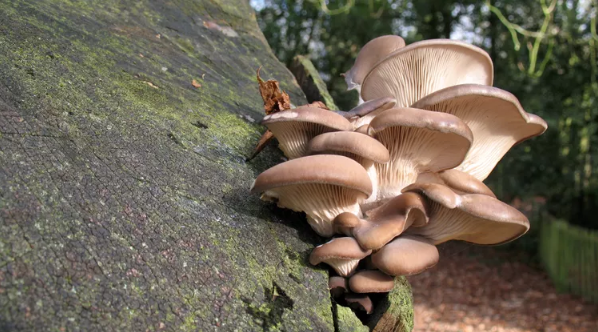
2. Oyster Mushroom (Pleurotus ostreatus)
The oyster mushroom is already popular as an edible mushroom and is widely used in cooking.
Researchers have discovered that its fungal mycelium can interact with certain synthetic materials and help break them down.
Because oyster mushrooms are easy to cultivate, scientists are interested in their potential role in sustainable waste solutions.
Possible future applications include:
- Controlled plastic treatment systems
- Research into biodegradable materials
- Sustainable biotechnology
3. Aspergillus tubingensis
Another fungus that has attracted attention is Aspergillus tubingensis.
Researchers discovered that this fungus could grow on polyester polyurethane and gradually break it into smaller components.
This discovery has increased interest in fungi-based solutions for plastic waste management.
Can Plastic-Eating Mushrooms Be Used to Clean the Environment?
The idea sounds simple:
Plastic waste + fungi = natural cleanup solution.
However, real-world applications are more complicated.
Scientists still need to understand:
- How quickly fungi can break down plastic outdoors
- Whether the process works on different plastic types
- How to safely manage the resulting materials
- How to prevent unwanted environmental effects
A major challenge is controlling where these fungi are used.
Introducing new organisms directly into natural environments could create unexpected ecological problems.
For this reason, researchers believe controlled systems may be a safer approach.
Are Plastic-Eating Mushrooms Safe to Eat?
This is one of the most common questions about plastic-eating fungi.
The answer is: not necessarily.
Some edible mushroom species may remain edible after certain controlled experiments, but mushrooms grown on plastic materials could potentially absorb harmful chemicals or contaminants.
Researchers are still studying:
- Food safety
- Chemical absorption
- Long-term effects
At this stage, plastic-degrading mushrooms should be viewed as a scientific research opportunity rather than a new food source.
Benefits of Fungi-Based Plastic Solutions
If developed successfully, fungi-based solutions could provide several environmental benefits.
1. Natural Waste Reduction
Fungi could potentially help reduce certain types of plastic waste by using biological processes.
2. Lower Environmental Impact
Compared with some industrial methods, biological solutions may require fewer resources.
3. Inspiration for Sustainable Technology
Studying fungi can help scientists develop:
- New biodegradable materials
- Better recycling methods
- Nature-inspired solutions
Challenges and Limitations
Despite their potential, plastic-eating fungi are not a complete solution to plastic pollution.
Important limitations include:
Slow Decomposition
Some fungi require weeks or months to break down plastic under controlled conditions.
Limited Plastic Types
Not all plastics can be easily degraded by fungi.
Environmental Safety
Large-scale outdoor use requires careful research to avoid ecological risks.
Prevention Is Still Essential
The most effective way to reduce plastic pollution is still:
- Using fewer single-use plastics
- Choosing reusable products
- Improving recycling systems
How You Can Support Sustainable Solutions Today
While scientists continue researching fungi-based technologies, individuals can already make a difference.
Simple actions include:
Reduce Single-Use Plastics
Replace:
- Plastic bottles
- Disposable bags
- Plastic containers
with reusable alternatives.
Choose Sustainable Products
Look for:
- Durable products
- Refillable options
- Minimal packaging
Support Circular Living
A sustainable lifestyle focuses on:
- Reusing materials
- Repairing products
- Reducing unnecessary consumption
Learn From Nature
The discovery of plastic-eating fungi reminds us that ecosystems contain incredible solutions.
Protecting biodiversity is important because future environmental breakthroughs may come from organisms we have not fully understood yet.
Final Thoughts
Plastic-eating mushrooms represent one of the most fascinating examples of how nature may help address modern environmental challenges.
Although fungi are not currently a complete answer to global plastic pollution, their ability to break down certain plastic materials offers valuable insight into sustainable innovation.
The future of waste management may not rely on one single solution. Instead, it will likely combine better recycling, reduced plastic use, smarter materials, and lessons from nature itself.
By understanding and protecting the natural world, we may discover new ways to create a cleaner and more sustainable future.